Picasso Museum Paris: A Journey Through the Master’s Evolution

Sarah Mitchell
30 March 2026
Picasso Museum Paris: A Journey Through the Master’s Evolution
Introduction
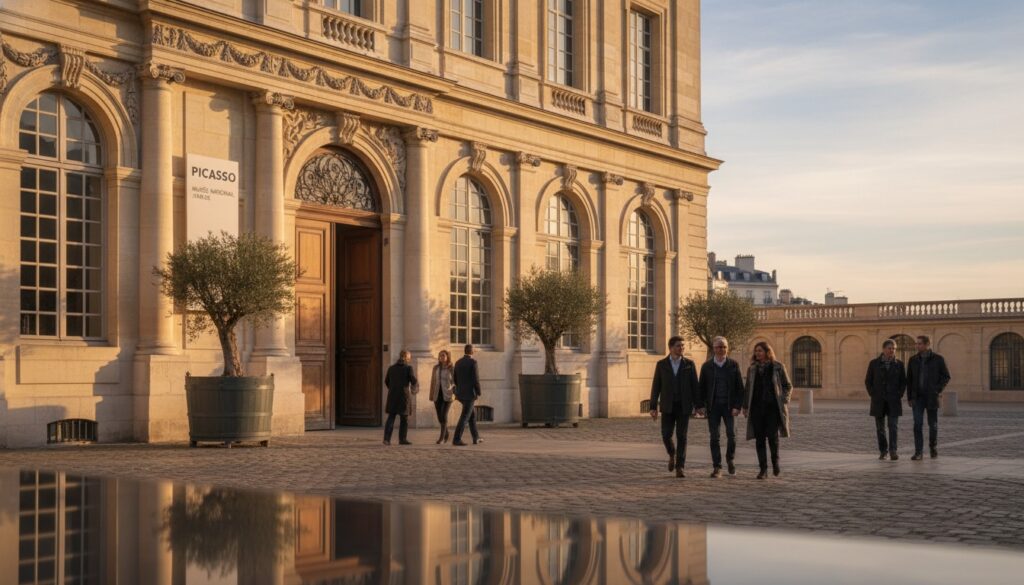
Nestled in the heart of Paris’s historic Le Marais district, the Musée Picasso stands as one of the world’s most extraordinary artistic treasures. Housed within the magnificent Hôtel Salé, a 17th-century mansion that itself tells stories of French aristocracy, this museum offers visitors an unparalleled journey through the revolutionary mind of Pablo Picasso. Unlike other museums that showcase scattered pieces, the Picasso Museum Paris provides the most comprehensive and intimate exploration of the master’s artistic evolution, spanning over seven decades of groundbreaking creativity.
With over 5,000 works including paintings, sculptures, drawings, engravings, and ceramics, this collection represents the largest public collection of Picasso’s works in the world. The museum’s unique advantage lies in its acquisition story—many pieces came directly from Picasso’s personal collection and estate, offering insights into works the artist chose to keep for himself.
The Historic Setting: Hôtel Salé’s Renaissance
The journey begins before you even encounter Picasso’s art. The Hôtel Salé, built between 1656 and 1659 for Pierre Aubert de Fontenay, a salt tax collector, provides a stunning architectural backdrop that enhances the artistic experience. The mansion’s name, literally meaning “salty hotel,” reflects its original owner’s profession in the unpopular salt tax collection.
Architectural Marvel Meets Modern Curation
The building underwent extensive renovation from 2009 to 2014, transforming it into a state-of-the-art museum while preserving its historic character. The renovation doubled the exhibition space to 3,800 square meters, allowing for more comprehensive displays and better visitor flow.
- Grand staircase: The magnificent baroque staircase serves as a dramatic entrance to the collection
- Period rooms: Original 17th-century features create intimate viewing spaces
- Modern galleries: Contemporary exhibition design highlights the artwork without overwhelming the historic setting
- Sculpture garden: The internal courtyard showcases Picasso’s three-dimensional works
- Academic studies showing classical training
- Early portraits revealing psychological depth
- Sketches that demonstrate his observational prowess
- “Self-Portrait” (1901): A haunting blue-toned self-examination
- “The Celestina” (1904): One of the period’s most powerful character studies
- Preparatory sketches showing his creative process
- Analytical Cubist works: Breaking down forms into geometric components
- Synthetic Cubist pieces: Reconstructing reality through collage and mixed media
- Preparatory studies: Revealing the intellectual process behind the revolution
- “Bull’s Head” (1942): Created from bicycle handlebars and seat
- “She-Goat” (1950): Incorporating wicker basket, ceramic pots, and palm leaves
- Bronze series: Multiple variations exploring single themes
- “Suite Vollard”: 100 etchings exploring classical mythology
- “La Tauromaquia”: Bullfighting series revealing Spanish heritage
- Book illustrations: Collaborations with poets and writers
- Paul Cézanne: The artist Picasso called “the father of us all”
- Henri Rousseau: Primitive style that influenced Picasso’s own work
- African masks and sculptures: Crucial influences on Cubist development
- Works by contemporaries: Pieces by Braque, Matisse, and Derain
- Weekday mornings: Fewer crowds, better viewing experience
- Thursday evenings: Extended hours until 9 PM
- Off-season months: November through March (excluding holidays)
- General admission: €16
- Reduced rate: €14 (students, seniors)
- Free admission: First Sunday of each month (October-March)
- Paris Museum Pass: Included with skip-the-line access
- Group tours in French and English
- Private tours available by appointment
- Specialized thematic tours focusing on specific periods
- Wheelchair accessible: Elevator access to all floors
- Tactile tours: For visually impaired visitors
- Sign language tours: Available by advance booking
- Picasso’s relationship with photography
- His influence on contemporary artists
- Connections between his work and literature
- Children’s art workshops inspired by Picasso’s techniques
- Family guided tours with interactive elements
- School group programs aligned with curriculum standards
- Art history lectures by leading scholars
- Technique workshops exploring Cubist methods
- Evening symposiums on Picasso’s cultural impact
- Art books: Comprehensive catalogues and scholarly publications
- Reproduction prints: High-quality reproductions of museum pieces
- Design objects: Items inspired by Picasso’s aesthetic
- Children’s materials: Educational games and art supplies
- Light meals and refreshments
- Peaceful atmosphere for reflection
- Views of the sculpture garden
- Extended hours during special exhibitions
“The building itself becomes part of the artistic narrative, creating a dialogue between classical French architecture and revolutionary modern art.”
Chronological Journey: From Blue Period to Final Years
The museum’s layout follows Picasso’s artistic evolution chronologically, allowing visitors to witness his transformation from a precocious young artist to the father of modern art.
The Formative Years (1881-1901)
The collection begins with works from Picasso’s youth, including pieces created when he was barely a teenager. These early works demonstrate his exceptional technical skill and hint at the revolutionary spirit that would later emerge.
Key highlights include:
Blue Period Masterpieces (1901-1904)
The museum houses several significant works from Picasso’s Blue Period, characterized by monochromatic blue and blue-green paintings reflecting his emotional state following his friend Carlos Casagemas’s suicide.
Notable works:
Rose Period and Classical Influences (1904-1907)
As Picasso’s mood lightened, so did his palette. The museum’s Rose Period collection shows the artist’s fascination with circus performers and classical themes.
Revolutionary Cubism (1907-1919)
Perhaps the most significant section, the Cubist collection demonstrates how Picasso, alongside Georges Braque, revolutionized Western art. The museum’s holdings include:
Beyond Paintings: Picasso’s Multimedia Mastery
One of the museum’s greatest strengths lies in its comprehensive representation of Picasso’s work across multiple media, showcasing his restless creativity and technical innovation.
Sculpture Collection
The museum’s sculpture collection spans Picasso’s entire career, from early bronze works to his revolutionary assemblages using found objects.
Highlights include:
Ceramics and Pottery
Picasso’s late-career fascination with ceramics is extensively represented, showing how he transformed traditional pottery into modern art statements.
Prints and Engravings
With over 1,500 prints, the museum houses one of the world’s most complete collections of Picasso’s graphic work, including:
Hidden Treasures: Picasso’s Personal Collection
A unique aspect of the museum is its display of Picasso’s personal art collection, revealing his tastes and influences. This collection includes works by:
“Seeing what Picasso chose to live with provides invaluable insight into his artistic mind and creative influences.”
Practical Visitor Information and Tips
Planning Your Visit
Best times to visit:
Ticket Information
Enhanced Experience Options
Audio guides (€5): Available in multiple languages with expert commentary
Guided tours:
Mobile app: Free download with interactive maps and detailed artwork information
Accessibility Features
Educational Programs and Special Exhibitions
The museum extends beyond permanent collection display through dynamic programming:
Temporary Exhibitions
Regular rotating exhibitions explore specific themes, periods, or relationships between Picasso and other artists. Recent exhibitions have examined:
Educational Workshops
Family programs:
Adult learning:
The Museum Shop and Café Experience
Curated Museum Shop
The museum shop offers carefully selected items that extend the Picasso experience:
Café Pause
Located within the museum, the café provides:
Conclusion
The Picasso Museum Paris offers far more than a simple art viewing experience—it provides a comprehensive journey through one of history’s most influential artistic minds. The combination of the stunning historic setting, the unparalleled collection breadth, and the intimate scale creates an encounter with Picasso’s work that is both intellectually stimulating and emotionally moving.
Whether you’re an art history scholar, a casual museum visitor, or someone seeking to understand modern art’s foundations, this museum delivers insights unavailable anywhere else in the world. The chronological presentation allows visitors to witness artistic evolution in real-time, while the multimedia approach demonstrates Picasso’s restless creativity across all artistic forms.
The museum’s commitment to education, accessibility, and dynamic programming ensures that each visit can offer new discoveries. From the Blue Period’s emotional depths to Cubism’s intellectual revolution, from intimate drawings to monumental sculptures, the Picasso Museum Paris stands as an essential cultural destination that continues to inspire and educate visitors from around the globe.
Call-to-Action
Ready to embark on your own Picasso journey? Plan your visit to the Picasso Museum Paris today. Book tickets online to avoid queues, download the museum app for enhanced navigation, and consider joining a guided tour for deeper insights. Whether you’re planning a first visit or returning to discover new exhibitions, the museum’s ever-evolving presentations ensure fresh perspectives on this master’s revolutionary legacy.
Pro tip: Combine your museum visit with exploration of the charming Le Marais district—its historic streets, boutique shops, and traditional bistros provide the perfect complement to your artistic adventure. Don’t forget to check the museum’s website for current special exhibitions and educational programs that might enhance your experience.